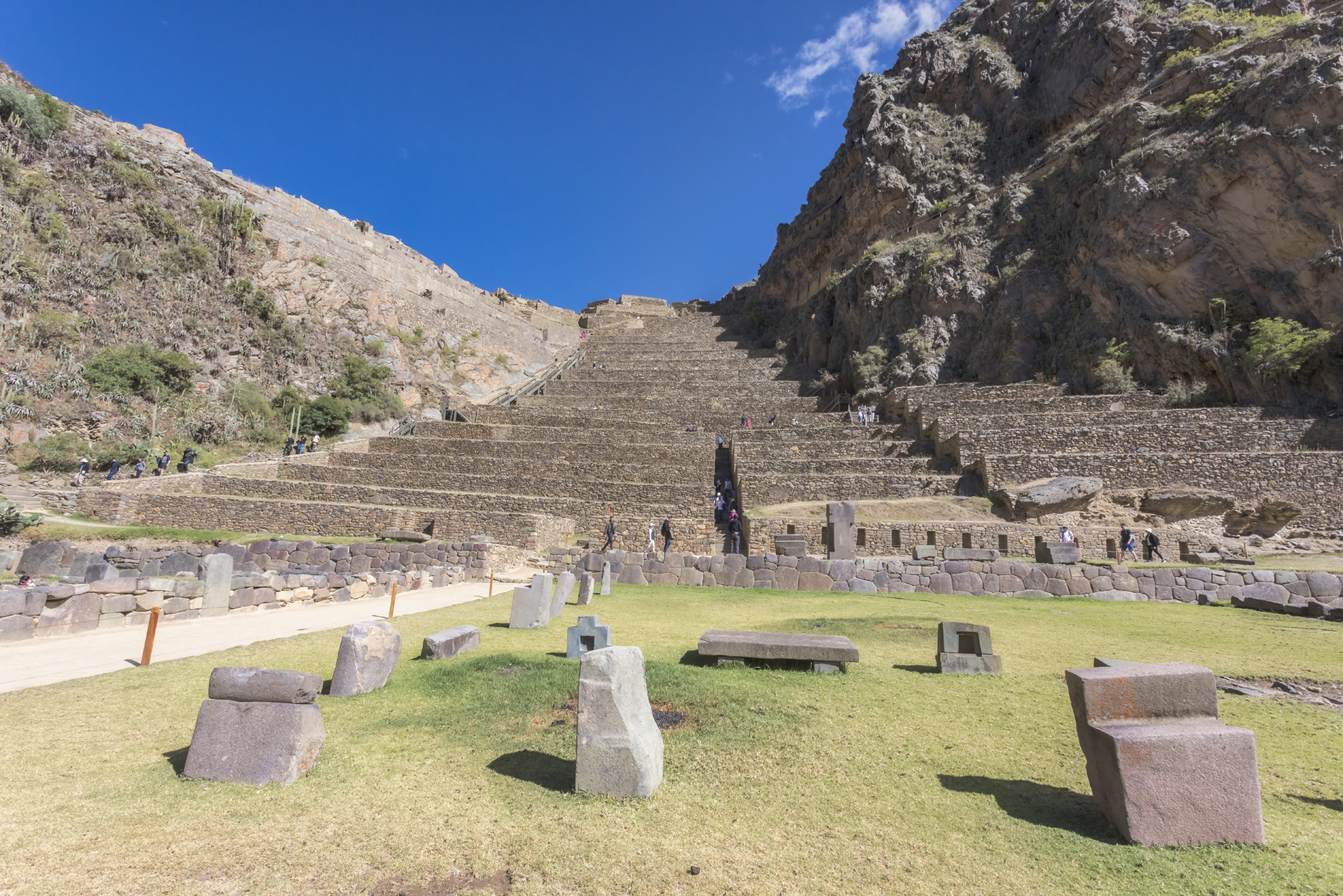
Nestled in the heart of Peru’s Sacred Valley, the quaint town of Ollantaytambo is an enchanting blend of ancient Inca heritage and current local culture. It’s my favorite place in the Sacred Valley, and I was excited to visit it again. Ollantaytambo ( pronounced Oh-yan-tay-tam-bo) is the last town in the Sacred Valley on the road to Machu Picchu. From here, visitors to Machu Picchu must take the train or hike the Inca Trail. Most tourists just pass through here, but I strongly recommend taking a day or two to explore the wonders of Ollantaytambo.
Legend of Ollanta
According to legend, Ollanta was a warrior and the most trusted general of Inca Pachacutec. Ollanta fell in love with Pachacutec’s daughter, Kusi Quyllur. Ollanta was not of royal blood, so Pachacutec forbade their union. When he asked to marry the princess, an engraved Pachacutec dismissed him. In response, Ollanta plotted his revenge and waged a ten-year war against the emperor. After Pachacutec’s death, his more forgiving son succeeded him. Eventually, Ollanta and Kusi Quyllur were reunited, along with their ten-year-old daughter. Thus, Ollantaytambo is named after the great Ollanta.
Temple Hill
The Ollantaytambo archaeological site, towering over the town, is one of the best examples of Incan architecture outside Machu Picchu and offers breathtaking views of the valley below. Various ethnic groups lived here until Pachacutec conquered and annexed them to the Inca empire in the 15th century. The main site, now called Temple Hill, was primarily used for religious purposes. During the Spanish conquest, Ollantaytambo briefly served as the capital of the native resistance led by Manco Inca. A battle here in 1537 was the last time the Incas defeated a Spanish army.

We started out early on a sunny morning to visit the site. (The earlier the better, before the crowds arrive from Cusco.) Upon entering, the main trail leads directly to the center of 17 stone terraces that rise above the main esplanade. Time to start climbing! As we ascended, we appreciated the size of these structures and began to notice the altitude – Ollantaytambo is 9160 feet above sea level. (That’s 2000 feet below Cuzco, but 1100 feet higher than the citadel of Machu Picchu, making it a good place to get acclimated before spending time in Cuzco or hiking at other sites.)

Temple Sector
Climbing up 200 steps, we reach the Temple Sector. This area is built of cut and fitted stones, showcasing the skills the Incas used in other important sites, such as Machu Picchu. In addition to the size of the stones transported here, I marvel at the precise fit of the stones aligned together at elaborate angles.


This wall really demonstrates the exactness calculated for the stones to fit together. There are various theories about these niches, but their purpose hasn’t been confirmed. From here we pass through the Sun Gate.

Manco Inca and the Spaniards
The view of the valley below is spectacular, and I try to imagine how it looked during the battle of Ollantaytambo. As I mentioned, the Incas defeated the Spanish conquistadors here. After escaping from Cusco, Manco Inca made his headquarters here, enlisting additional warriors from Amazonian tribes to unite against the Spaniards. Led by Hernando Pizarro, half-brother of Francisco Pizarro, seventy cavalry and third foot soldiers arrived in the valley, confident they would capture Manco Inca. Most likely they were shocked by the high walls and steep terraces, and even more so by the thousands of warriors slinging stones and arrows. Despite being outnumbered, the Spaniards relied on their superior weapons and cavalry advantage. However, Manco had a secret weapon: canals that fed into the valley. When he ordered them open, the valley floor flooded. The horsemen were soon mired in mud, forcing the Spaniards to retreat on foot, pursued by Incan warriors.

Passing through the Sun Gate, another series of steps leads to the unfinished Temple of the Sun.
The Temple of the Sun
Six giant monoliths are perfectly aligned and linked together with thin layers of stone. The pink-colored granite is oriented to glow with the rising sun. Molten bronze poured into the T-joints holds the wall together. Because of this and other features, archaeologists believe that this was the work of the Lake Titicaca Colla people. The Incas used a forced labor system throughout their empire to complete major archaeological sites.

Even more amazing is that these huge pieces of granite did not come from the Temple Hill area. They came from a quarry on the opposite side of the valley, about 5 kilometers away. How did the workers manage to maneuver them down a mountain, across a river and over the plains of the valleys, before climbing another mountain to secure them in place here? All without the aid of modern machinery!

Some of the additional sectors and trails were closed during our visit in May 2024, so we decided to retreat back down the stairs to explore the wonders in Ollantaytombo town.
Best-Preserved Inca Village in Peru
Built on original Inca foundations, it is the best surviving example of Inca town planning. The original layout consisted of four longitudinal streets crossed by serve parallel streets. At the center was a large plaza that was open to the east and surrounded by town blocks on the other three sides. All blocks on the south were comprised of two kancha, walled compounds with four one-room buildings surrounding a central courtyard. Today, the existing kanchas are some of the oldest continuously occupied dwellings in South America. We walked through town next to visit one of these kanchas.


After all of this exploring, our hungry group was ready for lunch. We headed to the main square and a delightful local restaurant. (Read about it and my other favorite Peruvian restaurants in a future post.)

Pinkuylluna
After lunch, the more adventurous, and/or more physically fit, members of our group hiked to Pinkuylluna, the archaeological site on the opposite hill from where we had spent our morning. Pinkuylluna is a series of Qolcas – the Quechua word meaning food and grain stores. The Incas built Qolqas in the upper levels of the hills to take advantage of the cold and strong gusts of wind to preserve corn, wheat, jerky and other foods.
The photo below shows the granaries on the right, “zoomed in” from the valley, and to the left is supposedly the carved face of the Incan Creator God, Viracocha. There is no proof that it is an actual carving rather than a natural feature, but there is a definite resemblance to a rather stern countenance.

The hike to the granaries is only about 1/2 mile but the trail is very steep and rocky, and more strenuous than the main archaeological site. The reward is more spectacular views and a good chance that you will have escaped almost all other tourists. Thanks to my intrepid fellow traveler, Dave Privett, for the photos of his Pinkyullana hike. (Click on photo for caption and to enlarge.)


And more…
There is much more to see and do, shops to explore, local restaurants to sample and even more archaeological sites.
It’s only a five-minute walk to Punku Punku, the traditional Inca entrance to town. Here you’ll find a double stone doorway with a small canal passing under it.

San Pedro Market is another interesting place to visit, only a few blocks from the Plaza de Arias. The first floor is mainly produce and other food items, while the second floor has clothing and household items. Many locals also sell the various traditional weavings and textiles around town, as well as the small artisanal market below Tower Hill.

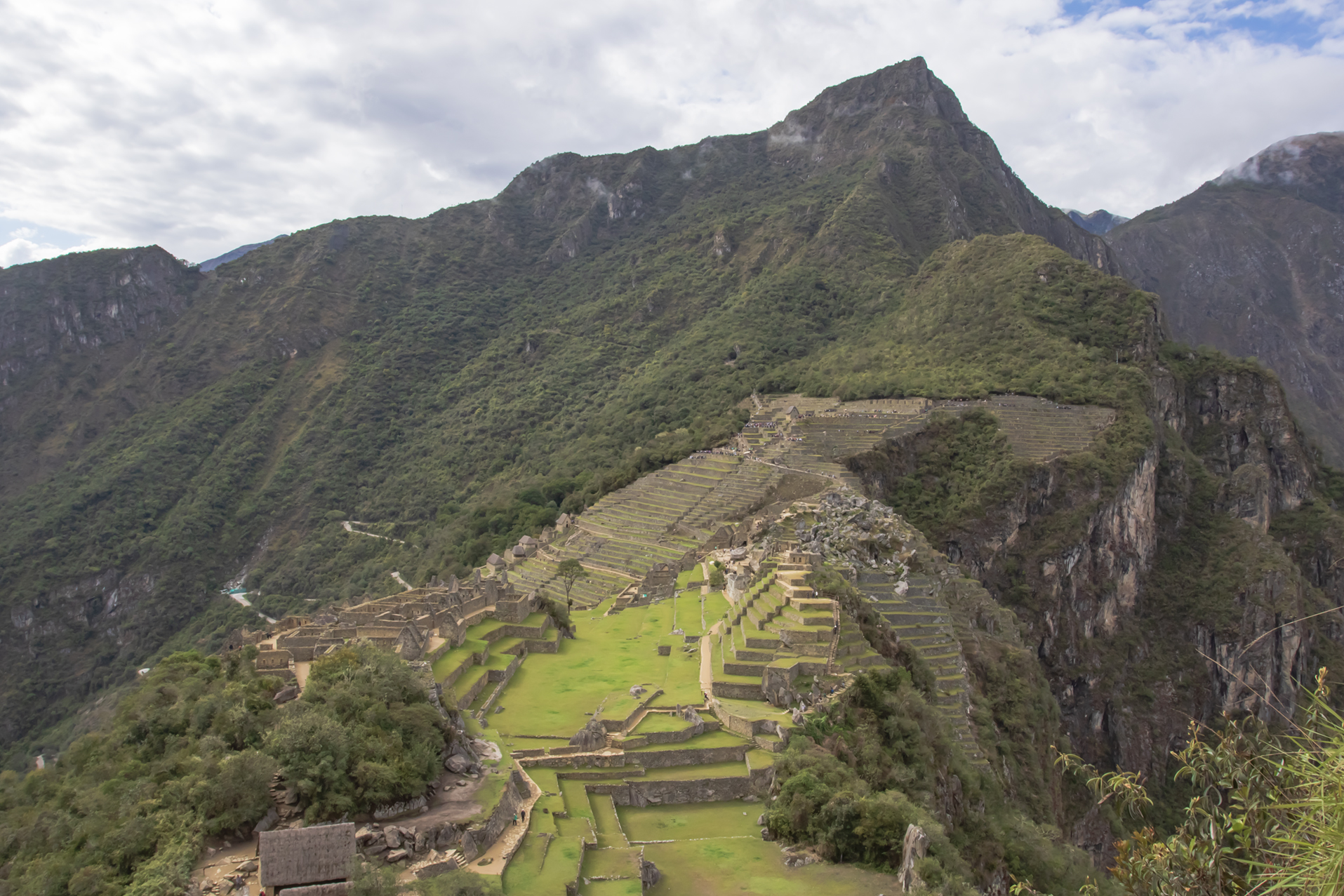
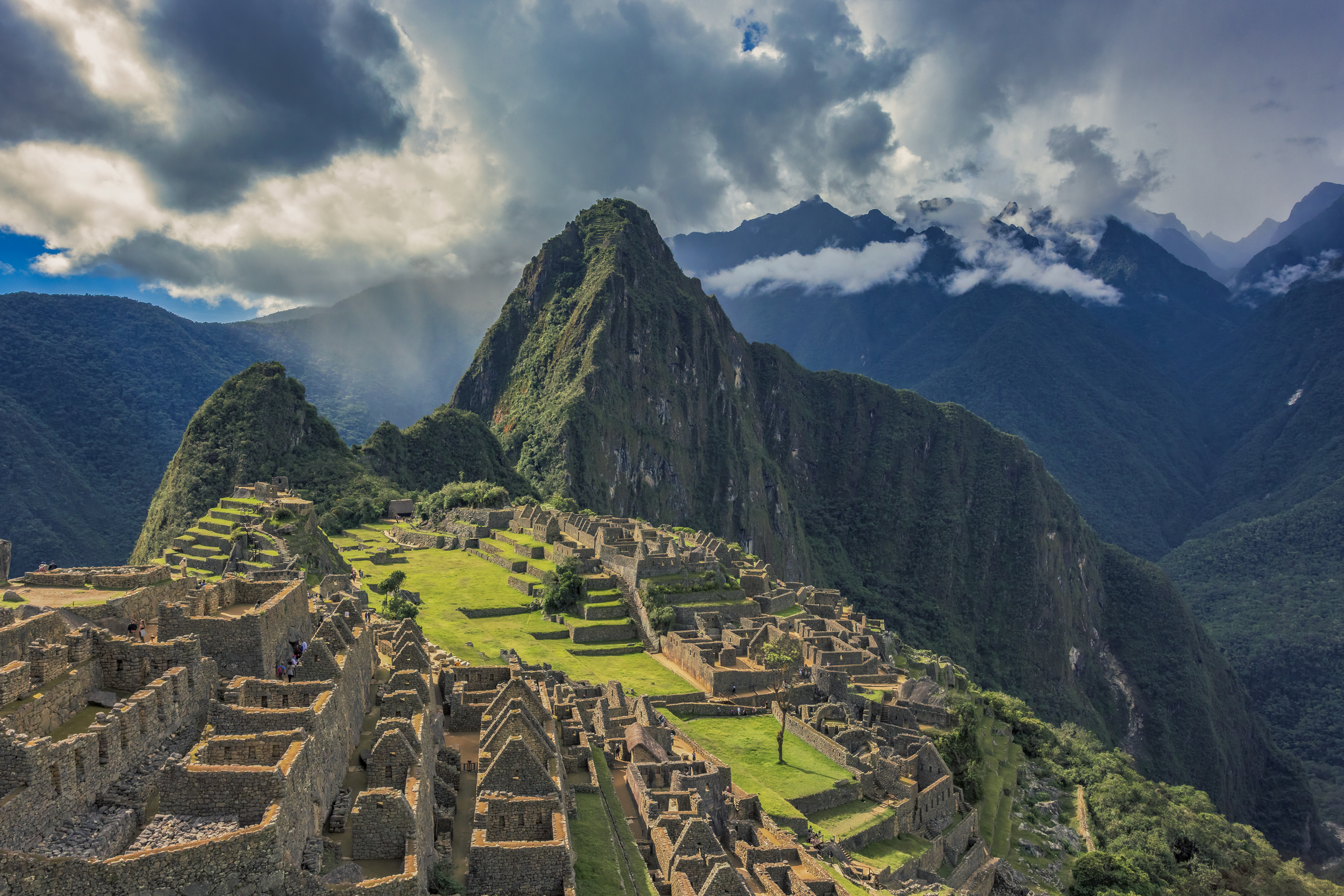
I chose to return to our hotel and save my arthritic knees for the next day’s hike at Machu Picchu!


Leave a Reply